Publications
The research and patents behind our work in visual prostheses, neural engineering, and wearable sensing.
Journal articles in Scientific Reports, Journal of Neural Engineering, Vision Research and more, alongside granted patents and applications.
2024
-
 Patent
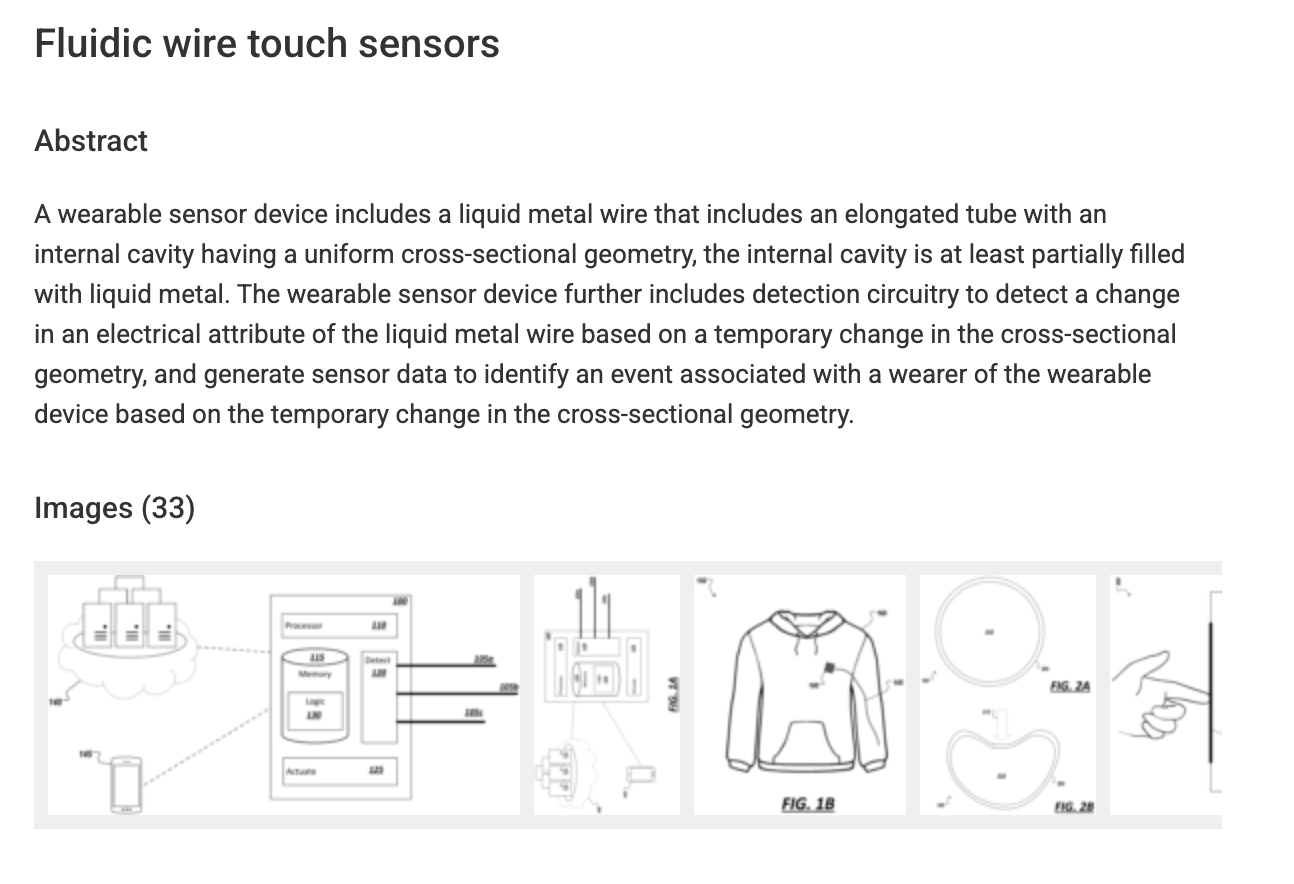
Fluidic wire touch sensors
US patent application 18/514,958
A wearable sensor device includes a liquid metal wire that includes an elongated tube with an internal cavity having a uniform cross-sectional ...
Gianluca Lazzi, Dulce Maria Altabella Lazzi, Kyle Loizos, Arup Roy, Proyag Datta
-
 Journal
Benefits of thermal and distance-filtered imaging for wayfinding with prosthetic vision
Scientific Reports, vol. 14
Visual prostheses such as the Argus II provide partial vision for individuals with limited or no light perception. However, their effectiveness ...
Roksana Sadeghi, Arathy Kartha, Michael P Barry, Paul Gibson, Avi Caspi, Arup Roy, Duane R Geruschat, Gislin Dagnelie
2023
-
 Patent
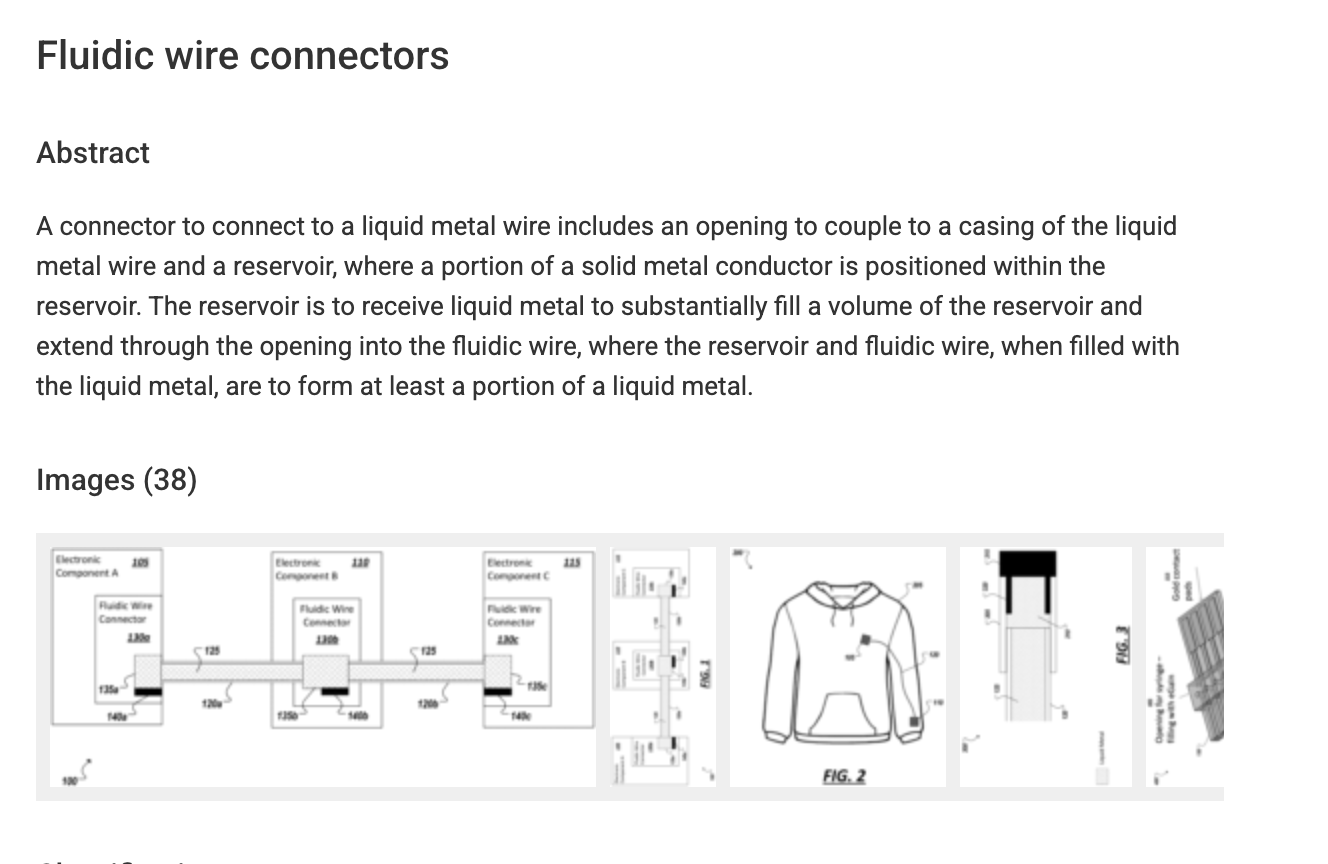
Fluidic wire connectors
US patent application 18/462,743
A connector to connect to a liquid metal wire includes an opening to couple to a casing of the liquid metal wire and a reservoir, where a portion ...
Gianluca Lazzi, Dulce Maria Altabella Lazzi, Kyle Loizos, Arup Roy, Proyag Datta
2022
-
 Patent
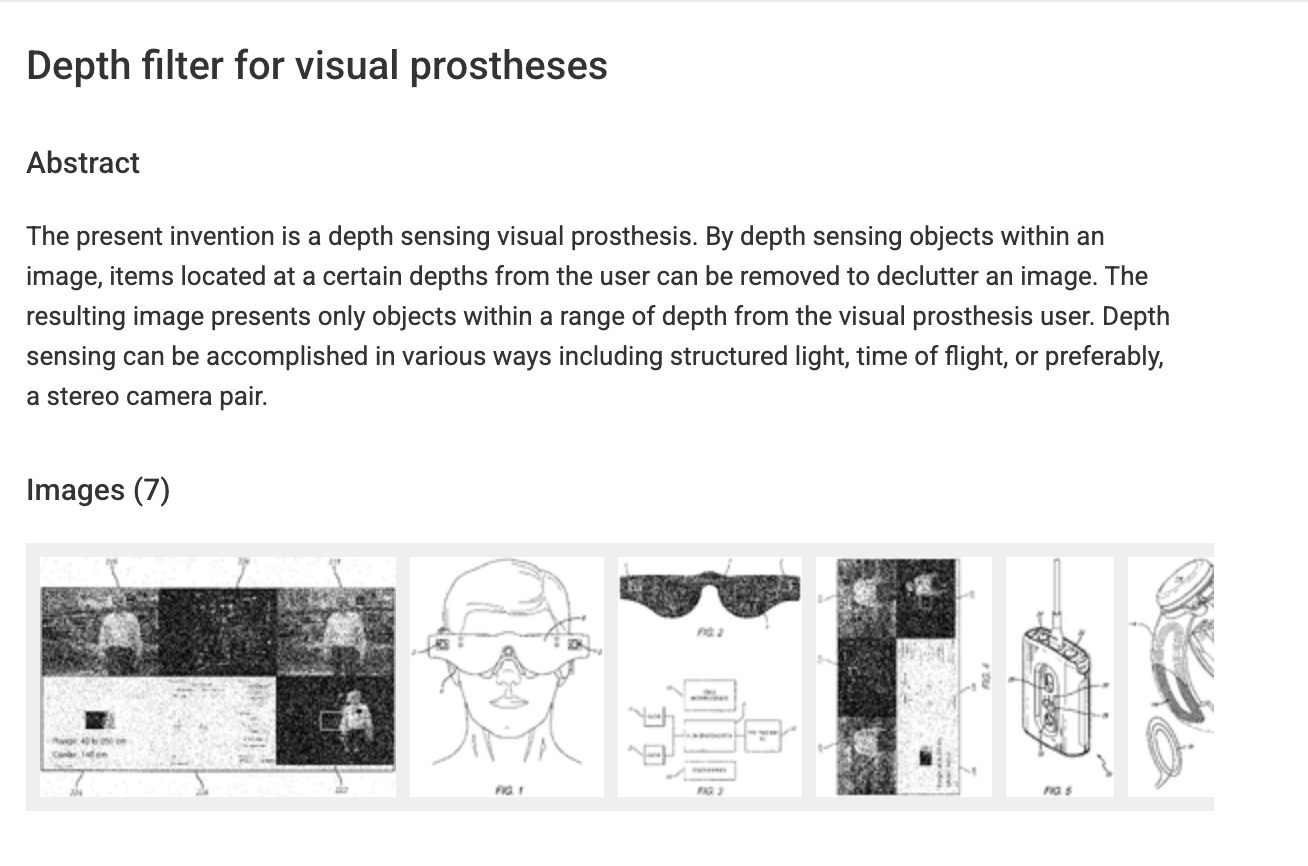
Depth filter for visual prostheses
US patent application 15/835,315
The present invention is a depth sensing visual prosthesis. By depth sensing objects within an image, items located at a certain depths from th.....
Arup Roy, Avraham I Caspi, Gislin Dagnelie, Greg Seifert, Paul Gibson
-
 Patent
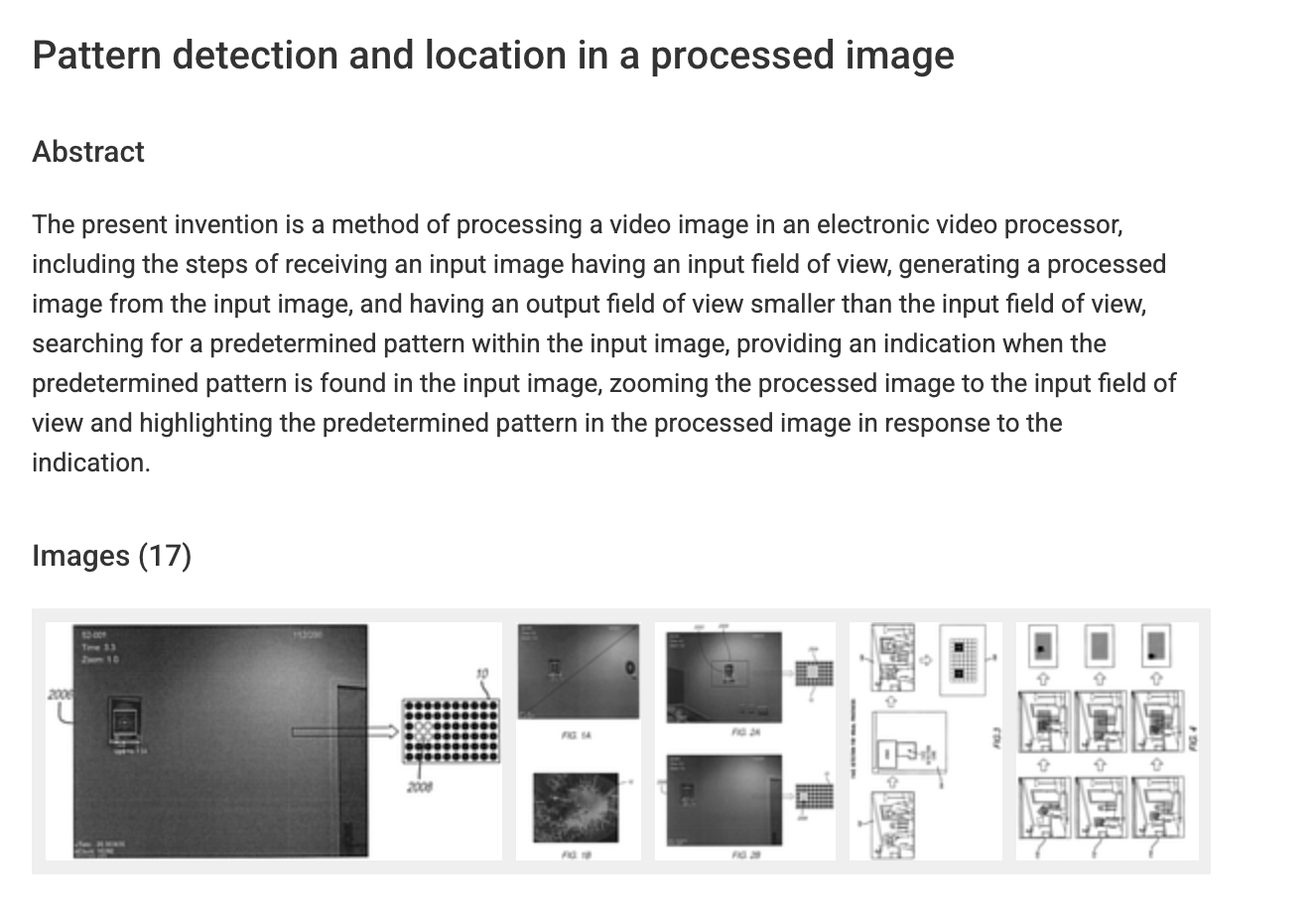
Pattern detection and location in a processed image
US patent application 16/519,855
The present invention is a method of processing a video image in an electronic video processor, including the steps of receiving an input image having an input field ...
Robert J Greenberg, Avraham I Caspi, Francesco Merlini, Arup Roy
2021
-
 Journal
Glow in the dark. Using a heat-sensitive camera for blind individuals with prosthetic vision
Vision Research, vol. 184
To date, retinal implants are the only available treatment for blind individuals with retinal degenerations such as retinitis pigmentosa. Argus II is the only visual implant with FDA approval, with more than 300 users worldwide ...
Roksana Sadeghi, Arathy Kartha, Michael P Barry, Chris Bradley, Paul Gibson, Avi Caspi, Arup Roy, Gislin Dagnelie
-
 Patent
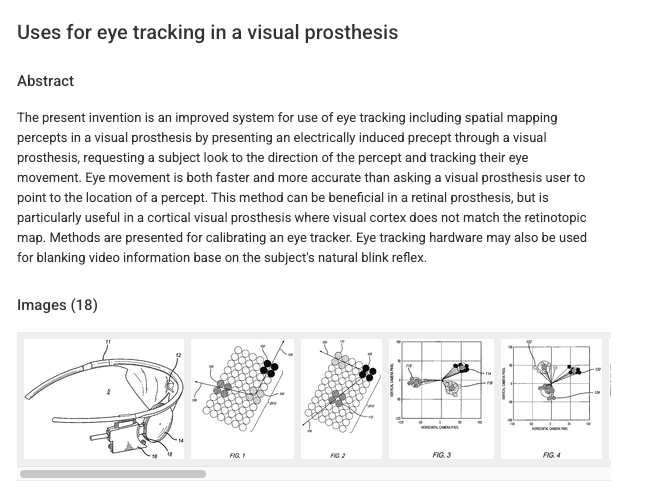
Uses for eye tracking in a visual prosthesis
US Patent 10,898,713
An improved system for eye tracking in visual prostheses, leveraging spatial mapping of percepts to enhance functionality.
Avraham I Caspi, Jessy D Dorn, Arup Roy, Robert J Greenberg
2020
-
 Journal
Prosthetic visual performance using a disparity-based distance-filtering system
Translational vision science & technology, vol. 9
Purpose: At present, Argus II is the only retinal prosthesis approved by the US Food and Drug Administration that induces visual percepts in people who are blind from end-stage outer retinal degenerations such as retinitis pigmentosa.
Arathy Kartha, Roksana Sadeghi, Michael P Barry, Chris Bradley, Paul Gibson, Avi Caspi, Arup Roy, Gislin Dagnelie
-
 Journal
Improved mobility performance with an artificial vision therapy system using a thermal sensor
Journal of neural engineering, vol. 17
To evaluate the benefit of integrating thermal imaging into an artificial vision therapy system, the Argus II retinal prosthesis, in simplifying a complex scene and improving mobility performance in the presence of other persons.
Yingchen He, Susan Y Sun, Arup Roy, Avi Caspi, Sandra R Montezuma
2019
-
 Journal
Thermal and Distance image filtering improve independent mobility in Argus II retinal implant
Journal of Vision, vol. 19
Purpose: To simplify the imagery presented to Argus II retinal implant wearers by filtering out information from background objects using head-mounted a thermal camera (T) and a stereoscopic distance filter camera (D).
Roksana Sadeghi, Arathy Kartha, Michael P Barry, Paul Gibson, Avi Caspi, Arup Roy, Gislin Dagnelie
-
 Journal
Depth discrimination in Argus II wearers using a stereo sensor based on two head-mounted cameras
Investigative Ophthalmology & Visual Science, vol. 60
Purpose: To simplify the imagery presented to Argus II retinal implant wearers by filtering out information outside the desired depth range using the disparity map from two head-mounted cameras.
Roksana Sadeghi, Michael Barry, Paul Gibson, Avi Caspi, Arup Roy, Gislin Dagnelie
2018
-
 Patent
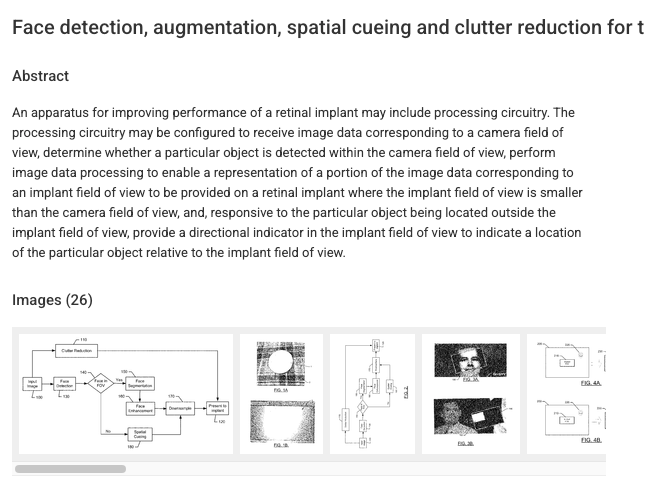
Face detection, augmentation, spatial cueing and clutter reduction for the visually impaired
US Patent 10,013,599
An apparatus for improving performance of a retinal implant includes processing circuitry configured to enhance image data and provide spatial cues for objects outside the field of view.
Derek M Rollend, Kapil D Katyal, Kevin C Wolfe, Dean M Kleissas, Matthew P Para, Paul E Rosendall, John B Helder, Philippe M Burlina, Duane C Cornish, Ryan J Murphy, Matthew S Johannes, Arup Roy, Seth D Billings, Jonathan M Oben, Robert J Greenberg
-
 Patent
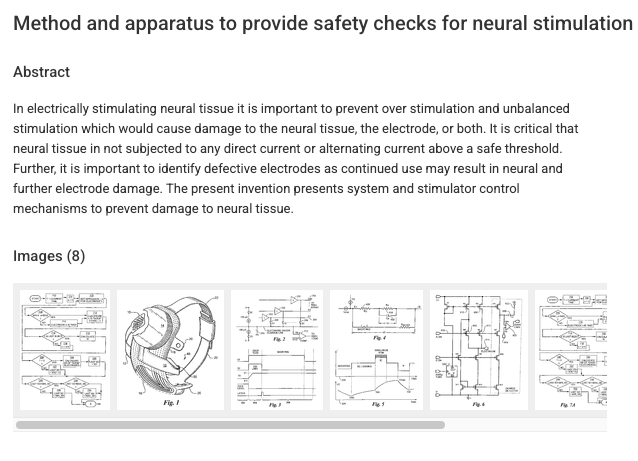
Method and apparatus to provide safety checks for neural stimulation
US Patent 9,913,985
In electrically stimulating neural tissue it is important to prevent over stimulation and unbalanced stimulation which would cause damage to the neural tissue, the electrode, or...
Robert Jay Greenberg, Kelly Hobart McClure, James Singleton Little, Rongqing Dai, Arup Roy, Richard Agustin Castro, John Reinhold, Kea-Tiong Tang, Sumit Yadav, Chunhong Zhou, Dao Min Zhou, Pishoy Maksy
-
 Journal
Eye movement control in the Argus II retinal-prosthesis enables reduced head movement and better localization precision
Investigative ophthalmology & visual science, vol. 59
Purpose: Visual scanning by sighted individuals is done using eye and head movements. In contrast, scanning using the Argus II is solely done by head movement, since eye movements can introduce localization errors.
Avi Caspi, Arup Roy, Varalakshmi Wuyyuru, Paul E Rosendall, Jason W Harper, Kapil D Katyal, Michael P Barry, Gislin Dagnelie, Robert J Greenberg
2016
-
 Journal
Embedded clutter reduction and face detection algorithms for a visual prosthesis
2016 38th Annual International Conference of the IEEE Engineering in Medicine and Biology Society (EMBC)
Retinal prosthetic devices can significantly and positively impact the ability of visually challenged individuals to live a more independent life.
Derek M Rollend, Paul E Rosendall, Kevin C Wolfe, Dean M Kleissas, Seth D Billings, Jonathan M Oben, John B Helder, Francesco V Tenore, Philippe M Burlina, Arup Roy, Robert Greenberg, Kapil D Katyal
2011
-
 Patent
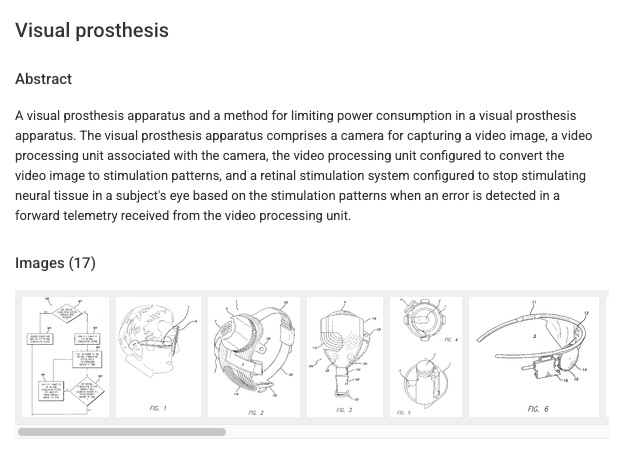
Visual prosthesis
US patent application 11/874,690
A visual prosthesis apparatus and a method for limiting power consumption in a visual prosthesis apparatus. The visual prosthesis apparatus comprises a camera for capturing a video image, a video processi...
Robert J Greenberg, Kelly H McClure, Arup Roy
Schedule your 1-hour technical deep-dive
A complimentary, no-obligation strategy session. Questions of any size are welcome too.
What we'll review
- Your requirements
- Your desired architecture
- Key safety, regulatory and cybersecurity risks
 Follow us on LinkedIn